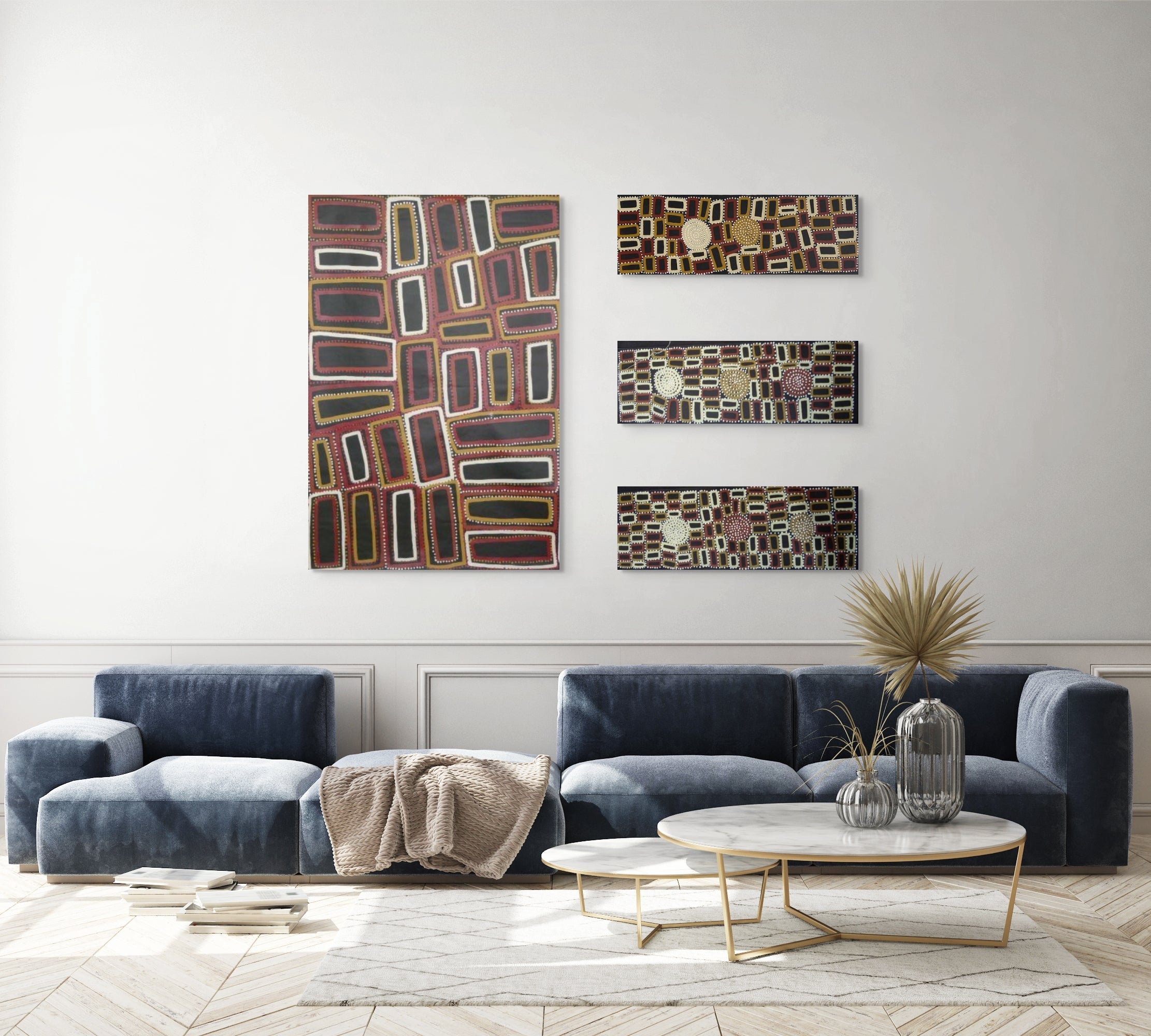
Each painting, dot, and colour field carries Dreaming art, ancestral stories, and the living cultural knowledge of communities that have stewarded Country for tens of thousands of years. For first-time buyers, or even seasoned collectors, the challenge is to engage with these works ethically—ensuring that the art’s cultural authority, spiritual depth, and connection to land remain intact.
To collect without losing the soul of the work requires understanding the artists, the stories, and the protocols that make the art more than decoration. It is a journey into trust, respect, and a deeper appreciation of what it truly means to own a piece of living culture.
Understand the Heart of Aboriginal Art
Before purchasing, it is essential to recognise that Aboriginal art is inseparable from Country, community, and ancestry. Each region of Australia, whether the Central Desert, Arnhem Land, or the Tiwi Islands, has distinct visual traditions, symbols, and languages. These are not aesthetic choices alone; they encode law, ceremony, and narrative.
For example, the work of Emily Kame Kngwarreye from Utopia or Kudditji Kngwarreye of the Central Desert tells stories that are thousands of years old, yet very much alive. These paintings map ancestral paths, waterholes, and songlines, preserving knowledge for future generations. Buying a painting is not merely a transaction—it is a responsibility to honour that legacy.
When approaching a purchase, ask yourself:
-
Who is the custodian of this story?
-
How is the narrative connected to land and family?
-
Does the purchase support the community ethically?
Choose Ethical Galleries and Platforms
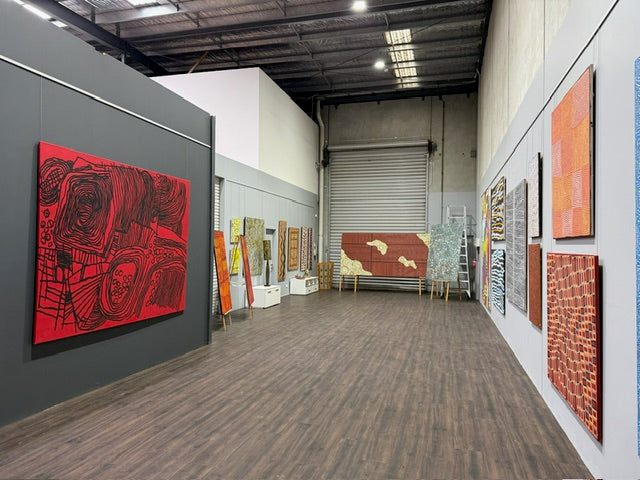
Not all galleries or marketplaces uphold cultural protocols. Choosing a reputable gallery is the first step in collecting ethically. Red Desert Dreamings is an example of a gallery that prioritizes cultural integrity:
-
All artworks are acquired with full artist permissions, ensuring that ceremonial and ancestral stories are shared responsibly.
-
The gallery works directly with artists, providing fair financial compensation and supporting community sustainability.
-
Contextual information is shared with visitors and collectors, explaining the significance of motifs, symbols, and colours.
When browsing for Indigenous Australian art, avoid unverified online listings or sellers without clear provenance. These can unintentionally detach the artwork from its cultural meaning and harm the communities behind it.
Know the Artist and Their Story
Ethical collecting begins with understanding the artist and the cultural framework of their work. Many artists are the custodians of specific Dreaming art stories—like songlines, ceremonial law, or ancestral narratives. These stories cannot be separated from the artist or their community.
-
Artists like Kathleen Petyarre encode seasonal cycles and bush tucker knowledge in her desert landscapes.
-
George Hairbrush Tjungurrayi communicates ancestral journeys and ceremonial obligations through dots and lines.
When you know the story, you respect the authority embedded in the work. Many galleries, including Red Desert Dreamings, provide artist statements and cultural notes alongside exhibitions. Reading these ensures that each piece is experienced with the depth it deserves.
Understand Cultural Protocols
Every artwork comes with cultural protocols. Not all motifs or stories are available for public sharing. Ethical collecting involves:
-
Confirming that the work was created and sold with permission from the artist and their community.
-
Understanding that some stories are gender-specific, clan-specific, or sacred, and are not meant for reproduction or display outside proper contexts.
-
Avoiding altering, reproducing, or misrepresenting the story in ways that could disrespect the artist’s authority.
Following these protocols keeps the work connected to its cultural roots. It ensures that the collector becomes a custodian of meaning, not just an owner of an object.
Consider Provenance and Documentation
Provenance is crucial for ethical and responsible collecting. A well-documented piece:
-
Confirms the artist and community of origin.
-
Provides insight into the creation process, materials, and cultural significance.
-
Protects both the collector and the artist by ensuring authenticity.
Collectors should request certificates of authenticity, artist statements, and gallery records. These are not just legal tools—they are part of honouring the story and maintaining its integrity.
Respect the Spiritual Depth of the Work
Aboriginal art is deeply spiritual. Many paintings reflect ceremonial law, ancestral journeys, and the ongoing presence of Country. When purchasing:
-
Treat the work with reverence. Avoid placing it in spaces that could diminish its sacred meaning.
-
Learn the story behind the painting. Even a basic understanding of Dreaming art transforms the act of collecting from decoration to connection.
-
Share the story respectfully when discussing or exhibiting the work.
Collectors often report that knowing the cultural context transforms the viewing experience. A painting is no longer just visual—it becomes an emotional and spiritual journey that bridges continents and generations.
Build Long-Term Relationships With Artists and Galleries
Collecting ethically is not a one-time act. Sustainable, respectful collectors engage with the artist and gallery over time:
-
Attend exhibitions, workshops, and talks where artists explain their work.
-
Support multiple works from the same community, helping to sustain artistic production and cultural continuity.
-
Advocate for fair representation and share the importance of ethical collection practices with others.
Red Desert Dreamings exemplifies this approach, providing an environment where collectors, artists, and visitors can engage in dialogue. This builds trust and ensures that every artwork’s story remains connected to its people and place.
Avoid Common Pitfalls
First-time collectors often make mistakes that risk disconnecting the work from its cultural essence:
-
Buying from unverified online sources without checking provenance.
-
Assuming all art can be publicly displayed or reproduced.
-
Prioritizing aesthetics over cultural meaning.
-
Overlooking the artist’s story, authority, and custodial rights.
Avoiding these pitfalls is essential to preserving the soul of the work. Ethical collection is about more than ownership—it is about stewardship.
Experiencing the Art Beyond Ownership
Even if a collector does not purchase immediately, visiting ethical galleries allows connection to Aboriginal art:
-
Learn the history, motifs, and cultural context through curated exhibitions.
-
Hear the stories directly from artists or Elders, gaining insight into ceremonial and ancestral knowledge.
-
Understand the emotional and spiritual weight carried by each work before deciding to bring it into a personal collection.
This approach fosters respect, ensures informed purchasing, and deepens the connection between collector and Country.
Conclusion
Collecting Aboriginal art without losing its soul is an act of respect, cultural awareness, and ethical engagement. Every painting carries Dreaming art, Indigenous Australian stories, and centuries of connection to Country. By choosing ethical galleries like Red Desert Dreamings, understanding the artist and their story, following cultural protocols, and respecting spiritual significance, collectors can acquire works responsibly.
Owning Aboriginal art is not just about decoration or investment—it is about joining a continuum of cultural storytelling, supporting communities, and honouring the living custodians of Country. A single painting can become a bridge across generations, connecting the viewer to stories older than history itself.
When collectors act with care, curiosity, and respect, they ensure that the soul of Aboriginal art is never lost, carrying forward its beauty, knowledge, and meaning into the world.