Emily Kame Kngwarreye, an Anmatyerre woman from Alhalkere in Central Australia, changed how the world understands painting. Her work came from Country, ceremony, and thousands of years of cultural knowledge long before anyone in the global art world knew her name. When she finally began using acrylic paint in her late seventies, she wasn’t learning a new skill. She was expressing a visual language shaped by decades of ceremonial practice, land stewardship, and the responsibilities of a senior law woman.
While museums often describe her as an abstract artist, Emily’s paintings were never abstraction in the Western sense. What may appear “non-representational” to international audiences is, in fact, a precise mapping of Country, kinship, and ancestral storylines. Her works are expressions of the Dreaming carried through ritual, movement, and memory.
Only after this cultural foundation is understood does her global recognition make sense. Emily didn’t adjust her voice for the art world; the art world expanded to understand her.
A Life Rooted in Country
Emily was born around 1910 on Alhalkere Country, northeast of Alice Springs. For most of her life she lived traditionally, embedded in a community structured around ceremony, kinship, and cultural law. Long before she touched canvas, she held significant authority in women’s ceremonies, especially Awelye, and carried deep knowledge of Kame, the yam Dreaming that shaped much of her later work.
Her artistic language was shaped through decades of body painting, song, dance, and ceremonial story. The patterns she would one day paint on canvas were already in her body and memory. When she finally began painting on fabric and then canvas in the late 1970s and early 1980s, she wasn’t stepping into a new role. She was simply transferring a cultural practice to a new surface.
This grounding is why her art carries such weight. Every stroke comes from Country. Every dot comes from law. Every rhythm comes from ceremony.
A Visual Language Beyond Western Labels
Emily’s work is often placed in the same conversations as abstraction, yet her intent sits in an entirely different cultural space. To her, the paintings were not interpretations or experiments. They were representations of:
• yam root systems beneath the ground
• flowering cycles and seasonal shifts
• ceremonial body designs
• underground water pathways
• sacred sites and women’s knowledge
• the pulse of Country as it changes through time
Emily once described her painting process simply: she painted her “whole lot,” meaning everything she knew, everything she held, everything she carried.
This is why standing before one of her canvases feels almost like encountering movement. The surface seems to breathe. The colours hum. The patterns repeat and dissolve the way growing roots spread beneath the desert. Her paintings are environments rather than images, pulling viewers into the deep time of her homeland.
The Evolution of a Master
Although she painted for less than a decade, Emily moved through several distinct artistic periods. Each one reflects a new way of expressing the same Country.
Early Works
Her early pieces are built from delicate, closely layered dots that reflect ceremonial body-paint markings and the textures of yam roots. The palettes lean toward ochres, creams, and subtle desert tones. These works feel intimate and rhythmic, like the land seen up close.
Middle Period
Emily then shifted into a period of vibrant energy. Reds, greens, yellows, purples, and blues began to sweep across large canvases. Dots grew bolder. Brushstrokes widened. The compositions carried the fullness of seasonal change — blooming, seeding, growing, regenerating. These are the works that first caught international attention due to their sheer vitality.
Late Period
Her final years produced monumental canvases marked by sweeping lines and broad gestures that tracked the yam’s underground pathways. These paintings are confident, spacious, and deeply spiritual. Their power comes from their simplicity: a distillation of decades of knowledge into the essence of movement.
Her ability to shift from intricate layering to vast, open gestures places her among the great innovators of global art history, though she arrived there on her own terms.
How the Global Art World Came to Understand Her Greatness
Art historians often draw parallels between Emily’s gestural energy and figures like Pollock, Monet, or Rothko. These comparisons can help international audiences understand the scale of her achievement, but Emily’s vision stands apart.
She did not look to Western movements for influence. She looked to her Country, her Dreaming, and the ceremonial responsibilities she carried. The similarities lie in ambition and emotional force, not in inspiration.
By reframing Emily’s place in global art in this way — as an equivalent, not an offshoot — her significance becomes clearer. She is a giant in world art, not because she resembles anyone else, but because she expanded what painting can be.
Cultural Authority at the Core
One of the most important aspects of Emily’s work is that she had the cultural permission to paint the stories she painted. In Indigenous cultures, not every story is for every person. Access is shaped by kinship, ceremony, gender, and law.
Emily’s authority to depict Kame Dreaming came through ceremonial inheritance, making her paintings both artistic expressions and acts of cultural continuation. Every mark carries responsibility. Every pattern reflects knowledge maintained and passed forward.
For collectors, this depth of authenticity is central. Ownership is not just about acquiring a major artwork; it is about respecting a lineage of story and law.
International Recognition and Exhibition History
Once the art world caught up to what Emily was doing, her rise was immediate and lasting. Her work was exhibited across Japan, Europe, the United States, and every major institution in Australia.
“Earth’s Creation I,” one of her most celebrated works, sold for more than two million dollars and remains a cornerstone of Australian art history. Yet the monetary value tells only a small part of the story.
Her paintings challenge and expand global understandings of abstraction, making space for Indigenous knowledge within the highest levels of contemporary art discourse.
Legacy, Rarity, and Reverence
Emily’s legacy reaches across cultural, artistic, and collector communities.
Cultural Legacy
Her influence shapes the Utopia region and continues through younger generations, including family members who paint today. Her work affirmed that Indigenous cultural knowledge is not fixed in time; it evolves, adapts, and generates new creative forms without losing its integrity.
Artistic Legacy
Emily stands among the most important painters of the late twentieth century. Her ability to create vast, emotionally charged canvases at such a late stage of life shows an instinctive mastery that few artists achieve in any era. Museums around the world now recognise her as a key figure in global abstraction.
Collector Reverence
Collectors seek Emily’s work because of its rarity, cultural authority, and visual power. Her painting career was short, and many major works already sit in museums or public collections, making privately held pieces increasingly scarce. Owning a Kngwarreye painting is not just an investment; it is a connection to one of the most significant artistic voices of our time.
FAQs
1. Who was Emily Kame Kngwarreye?
Emily Kame Kngwarreye was one of Australia’s most renowned Indigenous artists, celebrated for her expressive abstract works inspired by her connection to Country.
2. What makes Emily’s art globally significant?
Her ability to translate ancient Dreaming stories into modern abstract forms earned her international acclaim and redefined what contemporary Aboriginal art could be.
3. How did Emily’s cultural background influence her work?
Her paintings reflect deep spiritual ties to her homeland in Utopia, Northern Territory, and often depict ancestral stories and bush food Dreamings.
4. Where can collectors view or purchase Emily Kame Kngwarreye’s artworks?
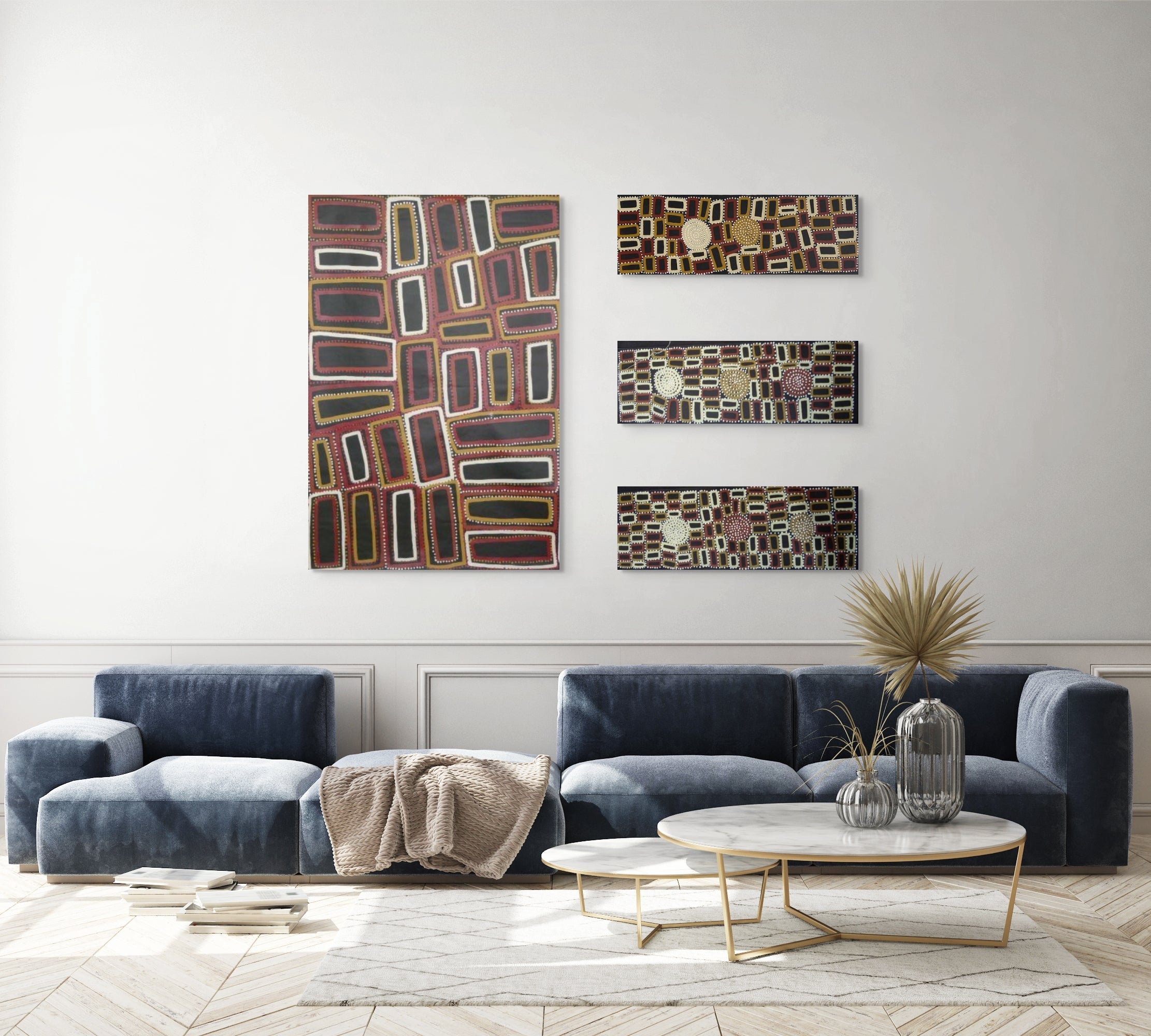
Authentic works and prints can be viewed at reputable Indigenous art galleries such as Red Desert Dreamings, which feature artists from the same region.
A Legacy Alive in Country
Emily passed away in 1996, but her presence in Australian art remains strong. Her paintings continue to guide conversations about Indigenous Australian art, abstraction, and cultural representation.
More than anything, Emily showed that painting can be an act of cultural continuity. Her canvases carry Country into the present. They hold ceremony in pigment. They map lives and stories that stretch far beyond the edges of the frame.
She painted the pulse of her homeland — a rhythm older than history, carried forward through every brushstroke. Her work reminds us that the deepest abstraction isn’t a departure from meaning but a return to its source.
Emily Kame Kngwarreye is not only one of Australia’s great artists. She is one of the great artists of the world. Her vision stands in its own light, shaped by Country, ceremony, and ancestral truth, and it continues to resonate across cultures, continents, and generations.
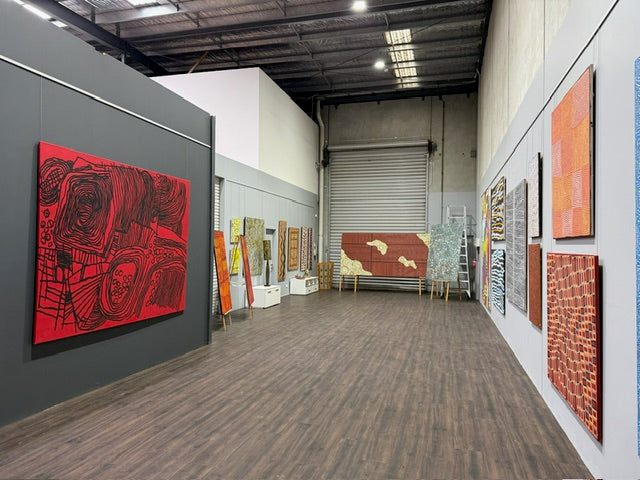
Experience the power of Emily Kame Kngwarreye’s art in person and learn about her influence on global abstraction.