In the vast interior of Australia, where red earth stretches beyond the horizon and silence carries its own presence, cultural continuity is not theoretical. It is lived. It is protected. It is passed carefully from one generation to the next.
This is where aboriginal art remains what it has always been: a living system of knowledge grounded in Country, kinship, and law.
To understand how traditions are sustained in Australia's Central Desert, you have to begin with responsibility. Painting here is not self-expression in the Western sense. It is cultural obligation. Stories are not invented. They are inherited. Authority is not assumed. It is granted through lineage and ceremony.
And that distinction changes everything.
Art as Cultural Law
In many Central Desert communities, knowledge is structured through complex kinship systems. These systems determine social roles, ceremonial responsibilities, and the right to represent specific ancestral narratives.
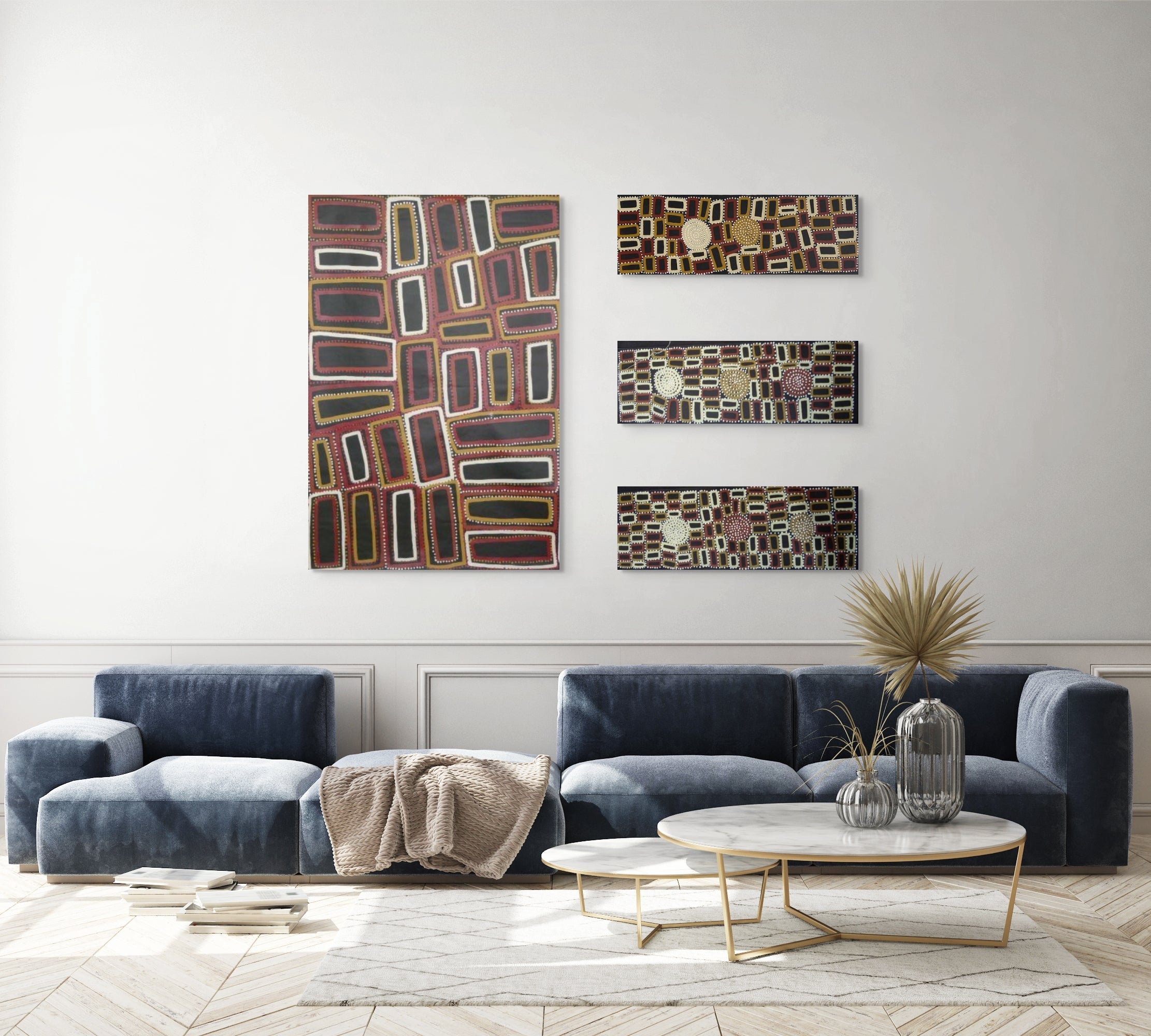
Artists paint what they are entrusted to paint. Certain stories belong to particular families. Others require ceremonial standing before they can be expressed visually. What may appear abstract to an outside viewer is often layered with encoded geography, ancestral journeys, and sacred sites.
This structure ensures that tradition is not diluted over time. It is reinforced.
Cultural law acts as both foundation and safeguard. It protects meaning from being separated from its source. It ensures that artistic practice remains connected to land and lineage rather than external trends.
For collectors, this continuity is central. When you acquire a work grounded in rightful authority, you are not simply purchasing an image. You are participating in a lineage that predates contemporary markets by thousands of years.
The Broader Ecosystem of Indigenous Art
Indigenous Australian painting reaches collectors through a range of legitimate channels. Community art centres play an important role in supporting many artists, providing cultural space, fair compensation, and intergenerational dialogue. But they are not the only pathway.
Independent artists who represent their own work are an equally vital part of the market. Artists like Sarrita King have built substantial careers outside the art centre model, managing their own representation and maintaining full authority over their creative output. This independence is not a departure from tradition. For many artists, it is an expression of it.
Reputable independent dealers also play a meaningful role, connecting collectors with works sourced ethically from across the broader Indigenous art community.
For serious collectors exploring aboriginal art for sale, understanding this full ecosystem is essential. Ethical sourcing, whether through art centres, independent artists, or trusted dealers, preserves both cultural meaning and long term value.
Intergenerational Knowledge
One of the most powerful aspects of Central Desert painting is the visible continuity between generations. Mothers and daughters often share stylistic elements. Uncles and nephews may carry forward variations of the same ancestral narrative.
Yet each artist brings their own interpretation within cultural boundaries. Innovation exists, but it is anchored in inherited responsibility.
This balance between continuity and individual expression keeps tradition strong without freezing it in time. It evolves organically while remaining rooted in Country.
Collectors who take time to learn about artist families and regional histories develop deeper insight into how these connections shape visual language. Biography becomes context. Context becomes clarity.
Country as Living Presence
In Central Desert traditions, Country is not landscape in the decorative sense. It is sentient. It holds memory. It holds story.
Paintings often map waterholes, ceremonial grounds, or ancestral pathways. These are not symbolic inventions. They correspond to real places with real cultural importance.
Sustaining tradition means maintaining this relationship to land. Artists return to significant sites. Ceremonies reinforce connection. Painting becomes a continuation of that relationship.
When collectors stand before a work grounded in specific Country, they are witnessing a visual articulation of belonging. That belonging cannot be replicated outside cultural authority.
The Importance of Ethical Representation
The growth of interest in Indigenous Australian painting has brought global attention. With that attention comes responsibility for galleries and collectors alike.
An ethical aboriginal art gallery does more than display works beautifully. It ensures documentation is accurate. It maintains respectful relationships with artists across all sourcing channels. It honours cultural boundaries when sharing stories.
This approach protects the integrity of the broader Indigenous art market and reinforces trust among serious collectors.
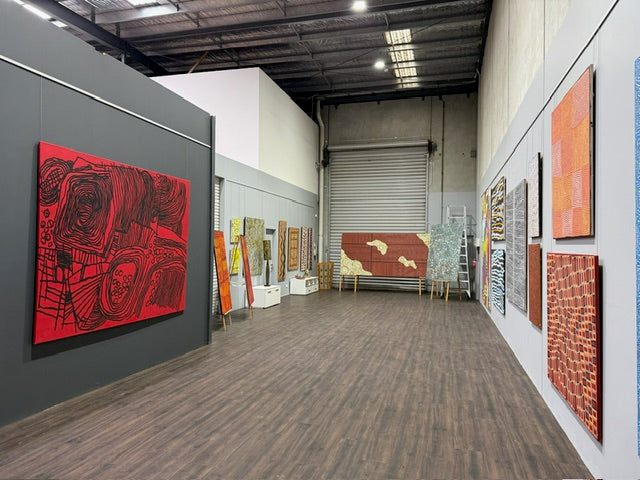
Red Desert Dreamings works with artists across the full spectrum, from community art centres to independent artists who represent their own work, as well as reputable independent dealers. Each painting is documented with care, and artist biographies are detailed and transparent.
For collectors, this framework provides confidence. It ensures that acquisitions are grounded in authenticity rather than speculation.
Value Beyond Aesthetics
Central Desert paintings are visually compelling. Colour fields pulse with rhythm. Repetition creates movement. Surface detail invites close attention.
But long term cultural value is anchored in continuity. Collectors who approach acquisitions with cultural literacy recognise that the durability of tradition strengthens the durability of value. When a practice is sustained across generations, through art centres, through self-representing artists, through families who carry stories forward, its artistic output carries historical weight.
That weight supports museum acquisitions. It shapes scholarly recognition. It influences market stability. More importantly, it honours the artists and communities who sustain it.
Experiencing Tradition in Person
There is a difference between viewing an image online and standing before a painting while hearing its story.
Private viewings allow time for conversation. They allow space to ask about artist lineage, community context, and provenance. We invite collectors to book a free tour and experience this depth firsthand.
During your visit, we explore:
-
Regional histories of the Central Desert
-
Artist family connections and independent artist backgrounds
-
Cultural protocols behind each work
-
Acquisition guidance tailored to your collecting goals
Collecting Indigenous Australian painting is not simply about acquisition. It is about stewardship.
Sustaining the Future
Tradition in the Central Desert is not fragile. It is resilient. But resilience depends on ethical partnership.
Artists sustain culture through ceremony, teaching, and painting. Galleries sustain culture through responsible representation. Collectors sustain culture through informed, respectful engagement.
When these roles align, continuity thrives. Australia's Central Desert continues to produce some of the most significant artistic expressions in the world because cultural authority remains central, whether that authority is exercised within a community art centre or by an artist managing their own practice.
If you are considering adding a Central Desert work to your collection, we encourage you to begin with knowledge. Visit us. Ask questions. Spend time with the paintings.
Tradition is not something to observe from a distance. It is something to approach with respect.
Frequently Asked Questions
What makes Central Desert aboriginal art culturally significant?
Central Desert paintings are grounded in inherited authority, kinship systems, and a direct relationship to Country. Each work represents a continuation of living cultural practice rather than decoration, making them significant both artistically and historically.
Do all Aboriginal artists work through community art centres?
No. Many artists work independently and represent their own work, building careers outside the art centre model while maintaining full cultural authority over their practice. Independent artists, art centres, and reputable dealers all contribute to a legitimate and diverse market.
How does intergenerational tradition affect the value of a work?
Works that sit within a sustained, multi-generational cultural practice carry greater historical weight. They are more likely to be recognised by institutions, included in significant collections, and to hold long term market relevance.
What should collectors look for when sourcing ethical Aboriginal art?
Look for detailed artist biographies, clear provenance documentation, and galleries that maintain transparent relationships with artists across all sourcing channels. Whether a work comes from an art centre, an independent artist, or a reputable dealer, rigour in documentation is the key indicator of ethical practice.
How can I learn more before making a purchase?
Visiting a gallery in person is the most effective way to build collecting confidence. We offer private tours where collectors can explore artist histories, cultural context, and provenance in detail. Book a free tour to begin that conversation.